Features
Industries
Support
About

From Complexity to Clarity: How NSW DPHI Leveraged ESdat

How NSW DPHI Leveraged ESdat

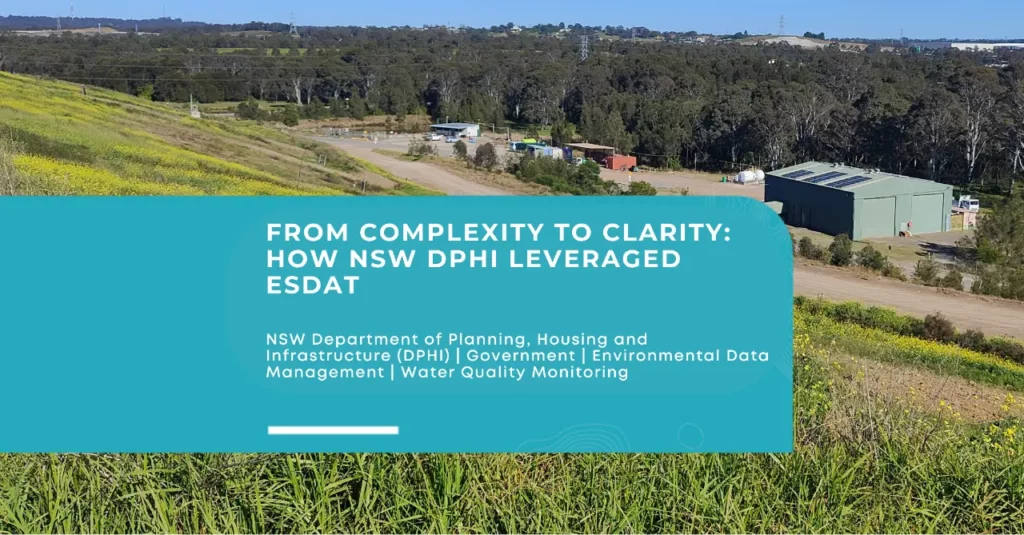
The Environmental Management Group within the NSW Department of Planning, Housing and Infrastructure (DPHI) plays a key role in supporting environmental compliance and sustainable land management of waste assets across the state. Among its responsibilities is the management of routine water quality programs, ensuring that monitoring activities meet regulatory requirements and provide reliable data for decision-making. As part of this work, the group oversees quarterly water quality compliance monitoring across eight sites in the Sydney metropolitan area with approximately 1,000 samples collected per year.

AT A GLANCE

8

Sydney metropolitan monitoring sites

1,000

Samples collected annually

500,000+

Chemistry records migrated

10,000

Field records migrated

30 years

Of historical data

Historically, the team relied on a previous data management system that created multiple challenges. Generating outputs from the former system was cumbersome, compatibility with laboratories was inconsistent, and the overall process lacked efficiency. The old system added unnecessary complexity, and slowed reporting, creating frustration for both field staff and program managers.

Recognising the need for improvement, the team sought a more reliable and user-friendly system – one that could reduce errors in the receipt of laboratory data, streamline reporting with easy table and graph functionality, integrate smoothly with government IT requirements, and remove reliance on Excel-based macros. ESdat was provided with converted data files from the previous system, along with over 500,000 chemistry records and 10,000 field records collected over more than 30 years, all of which were uploaded to the new system.

From complexity to clarity

By moving to ESdat, the Environmental Management Group addressed their previous challenges and set itself up for more efficient compliance monitoring. The ESdat system reliably integrates lab and field data enabling production of clear, tabulated results and the direct presentation of field parameters in universal graphical file formats – without the technical hurdles of the old system. This shift allowed staff to spend less time on manual troubleshooting and more time focusing on delivering high-quality environmental data, resulting in greater confidence in compliance outcomes and stronger support for informed decision-making.

Want to simplify your environmental data management?

More Case studies